What better way to celebrate Christmas than with this heartwarming discussion about reindeers that I'm sure is being replicated in homes all over the world around now between curious children and their loving guardians, assuming, of course, that their loving guardians also happen to be drunken, amoral sons-of-bitches masquerading as shopping mall Santas, which I'm entirely confident most of them are.
Or we could just keep it old school. I am, sadly, old school enough to have seen Beat Street when it came out in 1984, along with that year's other rap-sploitation hit, Breakdance. For the first time we experienced what other generations before us had, that universal white boy infatuation with (American) black street culture. As with jazz and blues before it, rap and its cultural debris, graffiti and breakdancing, hit us hard. What a sight we must have been, gawky Irish boys trying to bust our moves on flattened out pieces of cardboard in our parents' driveways or spray-painting our names under bridges before heading home because it was getting dark. Watching it now though, it's easy to hear the political message we missed then, about what Christmas is really like for those unlucky enough to find themselves on the wrong side of the economic tracks. Happy Christmas y'all. Kiss my mistletoe!
Thursday, December 23, 2010


Tuesday, December 21, 2010
The Film Club Reviews #8

I'd like to think that the stunned silence that greeted the ending of Yorgos Lanthimos' Dogtooth wasn't just shock at its unpredictable violence and sex scenes but also that people were struggling to respond to a troublingly original film, one determined to confound expectations. This seemingly surreal story about a couple who keep their grown-up children isolated from the world in a walled compound on the outskirts of a city, has the unarguable clarity of a parable and the matter-of-fact courage of its low-budget convictions. It's about repression, social and family conditioning, language, trust, corruption, sex, violence and ultimately rebellion. It's a tribute to its marvellous deadpan that it could easily be used to argue opposing positions; that the parents are repressive monsters or that the introduction of outsiders into the controlled environment disrupts the previously blissful existence of the 'children'. Or possibly both. The one thing that's unarguable is the film's belief in the maleability of human mind, that without any frame of reference we are capable of believing anything, as easily conditioned and trained as dogs. However, throughout the film there are moments when emotional outbursts, sexual desires and natural curiosity find ways to express themselves. Not let out in normal ways, they find different, less socially acceptable ways to escape. It's nature vrs nurture as some kind of social experiment then, hinting at the contradictions and failures of Communist regimes or the repressiveness of closed religious communities. In this sense it has a lot in common with Haneke's The White Ribbon. But it's a very different film, funnier, stranger, a twenty-first century Bunuelian fable, as sharp and enigmatic as a razor blade, as hard to get rid of as a stubborn tooth.
Monday, December 13, 2010
Silent Music

In the last few years I've had the pleasure of watching classic silent movies on the big screen, usually with live musical accompaniment by post-rock Irish group 3epkano. I've seen The Passion of Joan of Arc, Pandora's Box, The Blood of a Poet, Sunrise, Battleship Potemkin and The Man With the Movie Camera. I always find the combination enthralling. It's easy to sense the hold the medium had on pre-sound audiences, somehow you're more attentive to the images, faces especially, radiant in the celluloid light in ways so far removed from modern cinema it feels like a different art form, closer to alchemy than the seamless science of digital technology. I've usually come away from these screenings elated, with the faces of Maria Falconetti, Louise Brooks or Janet Gaynor seared into my mind, indelible images, religious in their iconic power.
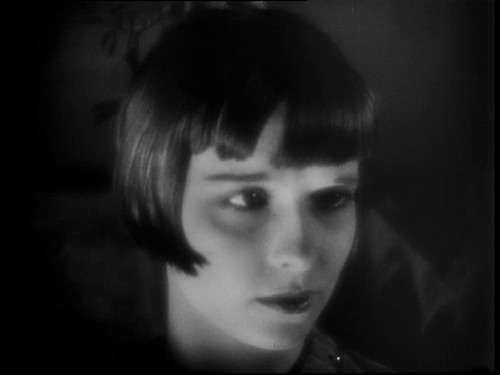
And the music is a vital componant to this. 3epkano's great strength is there understanding of film. A friend of mine saw Lambchop doing a live score to Sunrise and said it was a disaster because they essentially played their songs over the film with little reference to it. 3epkano never do this. At times they're completely silent, letting the significance of a scene work on the images alone, sometimes they fill the silence with just the barest brush of a cymbal, moody scrape of violin, waiting for the right moment, following the narrative rhythm of the film, before building to emotional crescendos. At its best, the combination is near overwhelming, the drum beats reverberating in your chest, the violins and guitars displacing the air, sonically entering your pores. It's something else, exciting. You feel like you understand what it was like when cinema was still new, still numinous with mystery, still giddy and awe-struck by its own power. Unfortunately, no-one has yet combined 3epkano's music with images of these films on Youtube but below is one of their pieces, Everybody Is Already Down Below from their album At Land.
Tuesday, December 7, 2010
Classic Scene #25

'Yes, the newspapers were right: snow was general all over Ireland. It was falling on every part of the dark central plain, on the treeless hills, falling softly upon the Bog of Allen and, farther westward, softly falling into the dark mutinous Shannon waves. It was falling, too, upon every part of the lonely churchyard on the hill where Michael Furey lay buried. It lay thickly drifted on the crooked crosses and headstones, on the spears of the little gate, on the barren thorns. His soul swooned slowly as he heard the snow falling faintly through the universe and faintly falling, like the descent of their last end, upon all the living and the dead.'
- from The Dead by James Joyce
Classic Scene #24
Sometimes, though, innocence is just that, not lost just pristine like the first fall of snow, the very first time children see it, when it's not a metaphor for anything, just pure wonder and fun, like Bambi's surprise at his own footprints in the snow or Thumper's infectious excitement at discovering the water is stiff and wonderfully slippy.
Monday, December 6, 2010
Classic Scene #23
As it's started snowing heavily again outside I suppose it's time for some more snow-related movie scenes. The most famous, of course, is little Charlie Kane and that sleigh in Citizen Kane, not to mention the snowflakes skittering through time in the smashed snow globe as old Charles breathes his last. Welles returned to snow as an emblem of lost innocence again the following year in this lovely scene from The Magnificent Ambersons. But in Jim Jarmusch's blank-generation hipster classic Stranger Than Paradise , snow becomes a white-out metaphor for the empty nothing of the characters' lives as they stare out at what's supposed to be Lake Erie, but is really the bleak reality of their future lives. Surely one of the worst tourist visits ever.
You Call This Snow? Why, Back In My Day...
As a little follow-up to the Phantom Ride piece below, I thought it would be nice what with all the snow round these parts at the moment to post this, another one of those excellent BTF shorts, this time from the big freeze of 1963, its editing reminiscent at times of the giddy ecstasies of Dziga Vertov's 1929 classic The Man With The Movie Camera.
Subscribe to:
Comments (Atom)