Monday, October 28, 2013

Damsels in Distress (2011)


Personal style. Why does it annoy people so much? Walt Stillman's Damsels in Distress really got up people's noses if the reviews are anything to go by. The one on the IMdb gives it a single star out of ten. To put that into context, Ed Wood's Plan 9 from Outer Space, often cited as the worst film ever made, gets two. At the London Film Festival there were mass walk-outs when it was shown. The reaction was even more extreme than what we usually see towards Woody Allen or Wes Anderson. (Allen is so toxic they edit out any mention of him in the advertising for his own films. Or in the case of Paris/Manhattan, a film about a woman's love for Woody Allen, the trailer has no place for a single mention of him). Why is this? Well, firstly, I think audiences have become so schooled in what to expect from a film they get impatient/outraged when it fails to adhere to these conventions, openly flaunts them, or, worst of all, seems blissfully unaware of them. Damsels in Distress seems guilty of all of these crimes. Stillman has no idea/or interest in how to pace a film, that's clear, the actresses struggle at times with the archly witty dialogue, the university setting has little connection to any reality, the narrative arc has no (artificial) drive. What's worse, the audience can see most of this is deliberate. Stillman doesn't care. He sets up a typical dynamic. Girl declares handsome men insufferable. Cue handsome editor of campus newspaper. They get into a public disagreement. It would be reasonable for the audience to expect this relationship to develop along a Hepburn/Tracy they-hate-each-other-but-really-love-each-other formulaic way. But having set up this plot avenue, he just drops it. The film isn't about that. It's counter-intuitive. It's in love with simple pleasures (dancing) and honest responses (the almost child-like frat boys). This knowing contrariness is the second reason certain people respond badly to the film. They instinctively resent films that display a bookish sensibility that is a subtle put-down to those not in the know. Stillman has read books and isn't ashamed to show it. He doesn't modulate his references because most people won't know them. He expects you to know/find out/not care. So the film doesn't hide its literary, oddball heart, its sophisticated, flippant disregard for seriousness. And then there's Greta Gerwig. Her Violet is like a space alien's idea of a Jane Austen character. Her desire to help those less fortunate than herself, the suicidal especially, is epically condescending, but her gawky/beautiful earnestness is mesmerising. Her heart is good and behind it all she's not what she seems. (Several of the characters are hiding behind made-up personas, re-inventing themselves, casually refuting notions of authenticity). When her doofus boyfriend Frank (a hilariously dim-witted Ryan Metcalf) cheats on her Violet becomes depressed, but soon discovers the restorative powers of nice-smelling soap and sets about inventing a new dance craze. The film hangs on Gerwig's ability to be both arrogant/sincere, knowing/naive, delusional/practical, to deadpan the humour with deliciously slow responses. So yes, it's whimsical, sweet-hearted, cleverer than it looks and ends with a show-stopping dance number to Things Are Looking Up (originally sung by Fred Astaire in the 1937 film Damsels in Distress). In short, all the things that annoyed people are the things I liked.

Wednesday, October 16, 2013

Death's Marathon


By 1913 D.W. Griffith was in the zone. In four years he'd gone from the static tableau of The Sealed Room (1909) to the fluid cross-cutting and economical story-telling of Death's Marathon. Apparently he had to fight his distributors who thought this rapid jumping between scenes would confuse audiences. It's hard to imagine now, of course, when our brains are so used to synaptic image-flow we're more likely to be confused (or bored) by long takes. Back then people had yet to learn the visual grammer of film. Griffith, like all true artists, brought his audience with him. Death's Marathon begins with two business partners pursuing the same woman (Blanche Sweet). She marries one (Henry B. Walthall) and they have a child. But things turn sour, married life doesn't suit him and he's soon out all night drinking and gambling, their relationship increasingly estranged. Finally he steals money from his own company and loses it playing cards. 'Determined upon suicide', he telephones his wife from the office to say goodbye, holding a revolver to his head. She tries to keep him talking while his business partner (Walter Miller)  races to save him. All this, remember, in under fifteen minutes. That's economy of storytelling for you. Griffith cuts adroitly between characters moving back and forth in space and time, between the worried wife, the suicidal husband and Miller's desperate race to save him. While everyone suffers from over-emphatic hand gestures, the acting is by-and-large subtle and affecting. Sweet gives the wife a care-worn, exhausted feel and her reaction to her husband's phone call is tensely emotional but never overwrought. (Amazingly she was only sixteen when this was filmed). Miller is solid in a pantomime ham way as the boring good guy while Walthall infuses his unreliable character, the wagging finger target of this morality piece, with genuine complexity. There's something almost demonic about his expression as he contemplates the gun, the manic happiness of someone who's made the decision already and all cares have disappeared. He's dead already. Around this tightly constructed tale Griffith still has time for little cameos of character detail and composition. Take the brief appearance of a messenger boy in the office. This is Robert Harron, a star of Griffith films throughout the 1910s until his untimely death in 1920 aged just twenty-seven (that most dangerous of ages for stars). He's on screen for ten seconds but he gives us the street swagger and gangly gait of a teenager in a uniform too small for him, putting his cigarette down on a table in the outer office as he enters and picking it up again on his way out, holding it behind his back as he exits. None of this is required, but Griffith films his entrance and exit anyway. Then there's the painterly composition at 7.57 with Sweet front right of the screen, the nanny behind her and the maid front left, in profile. In his documentary A Personal Journey Through American Cinema, Martin Scorsese says of Griffith that he understood 'the psychic strength of the lens'. It's a striking phrase. What exactly does he mean by it? Well, for one thing, it could read thoughts. Watch as Griffith keeps us on the faces of the actors during the final scenes, especially Walthall's. (Compare this to The Sealed Room which has no close-ups and is little more than a filmed play. You'd be hard pushed to realise the musician in that film is also Walthall). There's a lovely moment too in the first minute where the two men seem to think of their beloved simultaneously. The film cuts to a shot of her reading in her garden, a dream image, breathlessly still, (like a painting by Mary Cassatt), an elegantly spraying fountain in the background. It's a Victorian ideal of femininity both men share. Nothing tells us this is a fantasy but Griffith trusts that the images (men stop, woman in garden, men move again) will convey the idea. It's montage but also the lens capturing the meaning of thought, like a detective, a mind x-ray.

Thursday, September 19, 2013

Safety Not Guaranteed (2012)


Darius (Aubrey Plaza) is a magazine intern who accompanies a reporter to a small town to investigate an apparent nut-job called Kenneth (Mark Duplass). Kenneth has placed a classified ad in the papers looking for a companion to travel back in time with him. Darius poses as a potential candidate to get the scoop for the magazine but soon finds herself falling for Kenneth, a man who believes he's built a time machine and that government forces are out to stop him. She gets sucked into his world. He seems more alive than most other people around her. Her deadened, bored attitude is the mask of a dreamer cruelly disappointed in life. In a cynical world of shallow entertainment and snarky superiority, she craves sincerity and something to believe in. And that's the power of the film, that she wants to believe him against her better judgement. It should be a matter of faith. But the film undermines this idea with an ending that's too cute by far. Which is disappointing, but doesn't take away too much from what makes the film work, the chemistry between Plaza and Duplass. He's a smart, dog-eared presence, hovering in that zone between charming and odd, somehow knowing how to calibrate enough of each to keep us intrigued and onside. If he was a centimetre more handsome he'd be unbearable. But what, ultimately, gives the film weight, is Plaza's presence. Her ability to go from sulky indifference to dawning reverence on the head of a pin is something else. There's a gravity about her, a sense of real consequence in her emotional response. The fact that it's so reigned in only makes it all the better. She's an actress looking (in vain no doubt) for someone like Godard to build films around her, to glory in, investigate, tease and (maybe break) that presence. So yeah, the film is fine, I liked it, but it's symptomatic of a wider tendency in American indie films to settle for modest likeability, to champion the slightly odd, everything imbued in a mild melancholy. Safety is guaranteed. That's the problem. What this film would've been like with a director interested in ideas (of time travel), in the visual as a moral tool, in giving us a properly odd oddball rather than someone who could be the unconventional lead singer of an indie band. In the end, for all the charm and presence of the leads, it's lightweight, a modestly offbeat rom-com frustratingly close to being a lot more.

Saturday, September 14, 2013

135 Shots


135 Shots That Will Restore Your Faith in Cinema
Don't know about restoring faith in cinema. Some of us hadn't lost faith in it. But this montage of images set to Clint Mansell's Welcome to Lunar Industries from the soundtrack to Moon will certainly recharge your desire to see films you haven't seen and re-see others.

Tuesday, September 10, 2013

The Sound of Silence


'If we had any sense in our heads,' composer John Cage asks in Dick Fontaine's 1967 documentary, 'wouldn't we know the truth, instead of going around looking for it?' The truth, according to this great little film, which pitches Rahsaan Roland Kirk's experimental jazz up against Cage's philosophical questioning to explore the nature of sound, is that we don't need to go looking for it at all. It's all around us. Music is just a part of a greater entity called sound. Or all sound is music if we listen right. You might not agree with everything Cage says but it can only be good to have someone questioning received wisdom so vigourously. It begins with Kirk coming over the horizon, people looking over their shoulders at this blind jazz man with his shades and sax walking through a London park in the mid-60s. We see Cage loitering in a children's playground, asking questions: 'Is it a sound? If so, is it music?Is music music?Is sound enough? What more do I need?' Kirk tells us 'sound is something like eyesight to me' before playing not one, not two, but three saxes at once, switching between them, harmonising with himself, then playing flute while images of London traffic flash by. 'Is the truck passing music?' Cage asks. 'Why is it so difficult for so many people to listen?'' We see Kirk using tape-manipulated musique concrète and primitive electronic sounds. It was Pierre Schaeffer who developed musique concrète in the early 1940s, emphasising the use of sound and the importance of play in creating music. Kirk throws whistles to his audience for 'a blues in the key of doubleya.' The resulting song is charmingly wonky, an infectious groove carrying the pleasingly ramshackle sound of whistling. He gives out more whistles to children in the park and they follow him like he's the pied piper. Then it's back to Cage on a slide, a rocking horse. 'Could we ever get to when we thought the ugly sounds were beautiful?' Kirk improvising with zoo animals, the wild yell of a wolf, using his flute to provoke a duet. Cage preparing a work for musical bicycle at the Saville Theatre. 'What is the purpose of this experimental music? No purposes. Sound!' Finally Cage listens to Kirk's music in an echo chamber, a cacophonous crescendo. It ends with this final credo: 'There is no such thing as silence' just 'thy nervous system in operation, thy blood in circulation.'

Monday, August 26, 2013

An Unseen Enemy (1912)


The Gish sisters first film is a key moment in the development of cinema. It was childhood friend Mary Pickford who brought them to D.W. Griffith's office one day in 1912, Lillian nineteen (though claiming to be sixteen) and Dorothy just fourteen. An Unseen Enemy is a key moment not because it employed Griffith's ground-breaking use of storytelling techniques (although it does) but because in it his camera discovered Lillian Gish. And cinema was never the same again. It was the beginning of arguably the first director/muse relationship, that symbiotic double-act that inspires the best work of both. Film history is littered with examples; Browning/Chaney, von Sternberg/Dietrich, Godard/Karina, Scorsese//de Niro. Four years earlier Griffith had worked with cinema's first real star Florence Lawrence, although she remained uncredited at the time, known simply as The Biograph Girl. Since then she'd left Biograph to become famous under her own name for the publicity-savvy Carl Laemmle. With Pickford establishing herself at this time too, the powerful connection between faces on screen and the audience watching in the dark was beginning to dawn on filmmakers. That Lawrence and Pickford could project winning personalities that audiences wanted more of, identified with even, was one thing though. What Gish brought was something else. Just imagine Griffith looking through his camera and seeing her through it for the first time; natural, unhurried, with graceful hands and pre-Raphaelite hair. Pretty yes, a Renaissance princess, but with something else, something chaste, a hint of Puritan heritage. She seemed an ideal, instinctively unworried about the camera's gaze. No mugging, no desperation to please. There were secrets behind that reserve. The camera wanted to know her. It was clear, or implied, already, that her presence demanded more than potboiler quickies, more than pantomime gestures. So everything changed, even if no-one was fully aware of it. At the time, though, this was just another Griffith film, one of dozens he made that year. A doctor's death orphans his two young daughters. (Interestingly, it was only months since the Gish's real father had died). Their older brother (Elmer Booth) converts some of the estate into cash and stores the money in the household safe. But the 'slattern' housekeeper sees an opportunity. She phones a criminal friend to come help her rob the safe. They lock the girls in a room and threaten them with a gun through a hole in the wall. One of the girls manages to telephone their brother who rushes to the rescue. It's all absurdly watchable, even now (especially with the right music. I recommend Deep Waters by The Dirty Three). Griffith's direction is full of vitality and suspense. And it's fair to say Dorothy's good too. Griffith didn't rate her, more or less ignored her around the studio. But that prudish eye-roll at the end suggests the comic potential she had. There are many lovely moments in its short running time; the natural light through the sisters' hair, the gun pointing at the camera, at us, the anticipation on Dorothy's face as she closes in on the gun, her fabulous faint, the man in a straw hat dancing at the lobby desk (amazingly this is Erich von Stroheim), and while Booth's performance is fussy and over the top at times, right at the end, there's that little bit of comic business, the fingers to the lips, the tap on the belly. Lovely detail.

Monday, August 12, 2013

My drafts section is clogged up with half-written pieces and reviews. So in an attempt to de-clutter I'm throwing out some quick reviews.

Drive (2011)

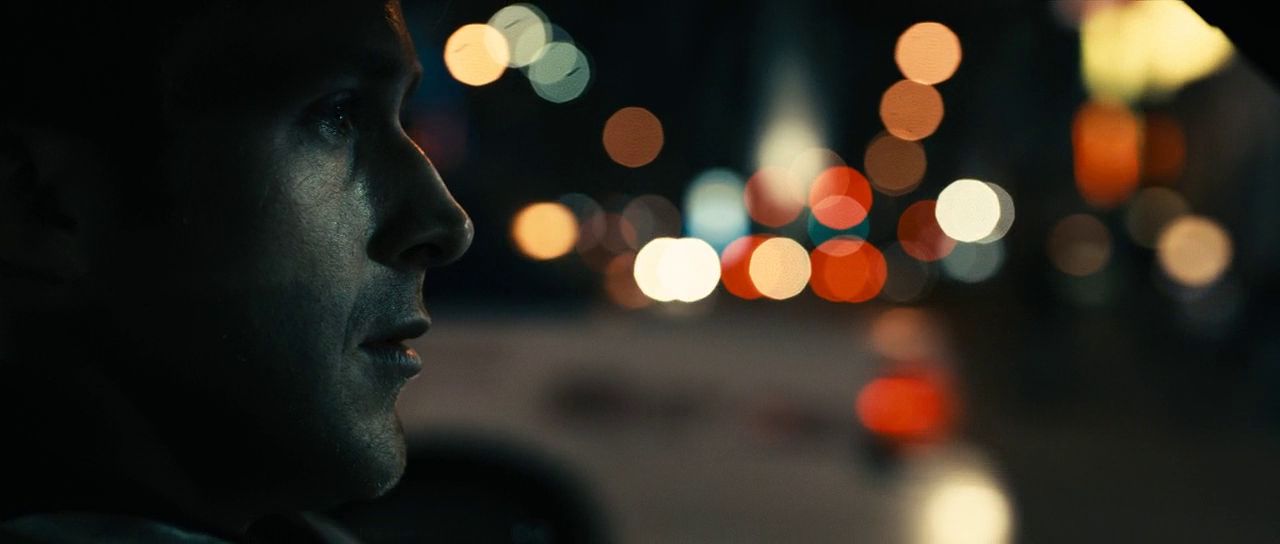
The city at night, the car as a means of escape, Taxi Driver (Albert Brooks), History of Violence, that jacket, Carey Mulligan's perfect face. The loneliness of the existential hero. A fairy-tale, found innocence and the violence required to protect it. He's doomed, like Mitchum in Out of the Past, he even works in a garage. His past is violence, he can't escape it, can't drive fast enough, can't resist the urge to risk, to be a driver of crimes. Gosling's monotone, reigned in, from a distance cool, up close wary, in control of situations, in control of himself even more. Then a woman comes into his life and he starts to make wrong decisions. It's noir, a sleek rethread of old themes, moody and gorgeous with LA light.

Date Night (2010)

Middle-aged married couple in a rut, the Fosters, decide to treat themselves to a night in the big city. Unable to get a table at a swanky restaurant they pretend to be another couple and take their table. Big mistake. The other couple are wanted by gun-wielding thugs and soon the Fosters are on the run. It has the feel of a reheated 1980s plot (the idea of New York at night as a dangerous place). Steve Carell and Tina Fey make it work even as the plot is insultingly unconvincing (the cops and baddies don't exist in any reality), the great Ray Liotta is wasted and the ending is lame. On the other hand it captures mundane married life well, there are several funny scenes and good support from a shirtless Mark Wahlberg and especially James Franco and Mila Kunis as a bickering criminal couple who nearly steal the film in one scene. You come away thinking that, given better material, Carell and Fey could be a great screwball couple. Fey in particular has a Diane Keaton meets Irene Dunne thing going on that could be, should be, great.

Bride Wars (2009)


I don't know why I watch these things. Sometimes the brain just wants to wallow in the shallows for awhile. And so, this. Predictable, tiresomely glossy and aspirational, full of product-placement and godawful music. It's barely film-making in any real sense. The only use it serves is to confirm what a brittlely sour actress Anne Hathaway is. The trick to making your character a selfish bitch in a rom-com is to cast an actress who can make us forget all the bad stuff by the end because underneath they're really nice. Hathaway displays no such ability here.

Knight and Day (2010)
Low expectations can be a film's best friend. This was a case in point. I'd heard nothing but bad things of this film or, to be more precise, I'd sensed an overwhelming wave of meh emanating from its general direction. It came out at a particularly low point in Cruise's public reputation and the lack of hype or interest seemed to portent the end of his career as a top action movie draw. Plus it was called Knight and Day. This didn't help. So imagine my surprise to discover that it was (at least for the first half hour) a fast-paced hoot, as June Havens (Diaz) gets caught up with spy Roy Miller (Cruise), an apparently unhinged, homicidal lunatic she does her best to escape from. This is the best part of the film because they don't have to explain the plot, just rush headlong into action, spouting funny lines. Unfortunately they have to bring the plot in, although, a say plot, I mean whatever nonsense someone wrote on the back of a cigarette packet and got paid an obscene amount of money for. It doesn't warrant any attention, the plot, just an excuse for bringing June and Roy together in various exotic locations. Cruise and Diaz have real chemistry together and James Mangold (Cop Land, Walk the Line) directs it with easy charm but too much dodgy CGI, especially towards the end. It isn't anything special, but it's way better than its reputation. Likeable, throwaway nonsense.