Fritz Lang's first talkie,
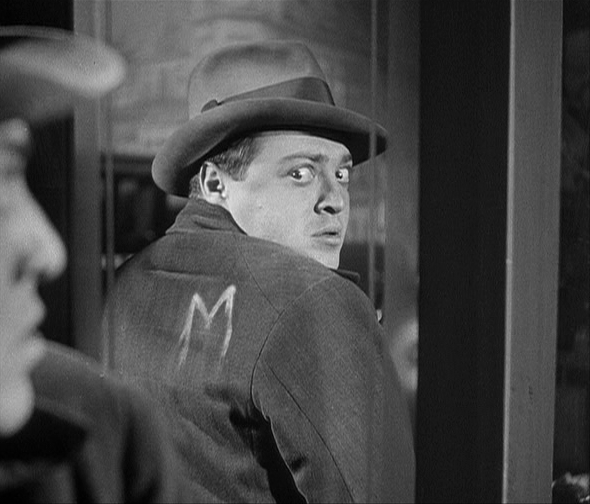
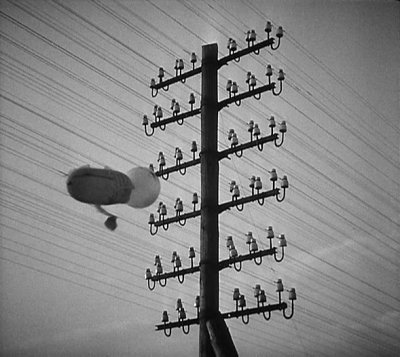
M is a masterclass in mise-en-scène, creating pace and tension in quick scenes that click together like a mathematical equation, dialogue from one scene spilling into the next, inducing a sense of urgency, the city overrun with suspicion and fear. It begins as a police procedural, a kind of 1930s CSI Berlin, with both the criminal underworld and the police trying to find child murderer Hans Beckert (Peter Lorre). Beckert is nothing more at this stage than a lurking shadow and an eerie whistle, a bogie man luring children away with presents, like the balloon he buys for Elsie, whose death is conveyed by two unforgettable images; her ball rolling out from behind a bush (we're left to imagine what has happened behind that bush) and the balloon snagged in telephone lines, fluttering in the cold breeze like a distressed soul, or a struggling body.

But then we enter Beckert's world, are with him as he suffers the agony of temptation. Suddenly the film inspires both empathy and horror. The criminal world's attempts to catch him are heroic at first, we're on their side. But as the trap closes in and the hunter becomes the hunted our allegience wavers. Surely this is the film Hitchcock learned how an audience will side with anyone if we're put in their shoes, shown their point of view. In many ways it's a modern film, a classy chase thriller. But it's much more too. It's impossible not to see it as prophetic, an x-ray of the society that so easily let the Nazis into power only two years later. It understands how public mood could be manipulated by fear, by tales of monsters, how the rule of law, with all its sophisticated techniques, was no match for the outrage of the mob. Beckert is a sick and dangerous man, but a man he is, not a monster. And yet the children are dead. If the police can't protect them, who will? There are no easy answers here which is what makes it resonate still. Lorre is extraordinary as Beckert, a man of cunning and weakness, tormented by demons, by his own desires, a pathetic wretch and a vision from our worst nightmares.