Showing posts with label classic scenes. Show all posts
Showing posts with label classic scenes. Show all posts
Monday, July 8, 2013
Classic Scene #37
'I have my dreams while I'm awake...' Jim Jarmusch's first film was shot on 16mm straight after dropping out of film school. (I like to think he only went to film school so he could drop out). I first saw Permanent Vacation many years ago as part of a Jarmusch quadruple bill alongside Stranger Than Paradise, Down by Law and Mystery Train (imagine that). Here we have the film's wandering protagonist (Chris Parker) exchanging words with Leila (Leila Gastil). The soundtrack is an atonal no-wave drone (by Jarmusch and John Lurie), the talk stilted, the silence in the sparse room punctuated by the sound of sirens outside. Then he places the needle on the portable record player and on comes Earl Bostic's Up There in Orbit. Suddenly everything stilted gives way to this hep cat eloquence. He's dreaming while awake. He's lost in the ecstatic music, falls to the ground, takes off his shoes. Afterwards he tells the mirror. 'Sometimes I think I should live fast and die young. Go out in a three-piece white suit, like Charlie Parker.' It's adolescent narcissism, of course, but it's more than that. In the mirror he's the dream of himself, just as cinema is the dream of ourselves. This is how the poor and artistic survived on New York's Lower East Side in 1980, that wasteland of cheap rent and cheap drugs. They searched out meaning in what they loved, what they discovered for themselves, in dance moves and coded gestures. You know he places the cigarette in his mouth the wrong way round so she can put it right, right? That's part of the cool. It's what she's there for.


Wednesday, July 4, 2012
Classic Scene #36
The undoubted highlight of West Side Story, Leonard Bernstein and Stephen Sondheim's America is not only one of the most thrilling song and dance routines in cinema history it's also a better critique of the American immigrant experience than a library-full of academic tomes or well-meaning documentaries. 'Skyscrapers bloom in America, cadillacs zoom in America, industry boom in America, twelve in a room in America.' Beneath the fun it's scathingly sardonic, a switchblade cutting through the platitudes of the American Dream, capturing the giddy schizophrenia of the place, hypocrisy and hope locked in a perpetual dance. And yet, the sheer vitality of the music is like a metaphor, something thrillingly American born out of immigrant anger and desire, metabolised from it, people released from backwards lethergy, from stifling convention or political oppression, channelling, at last, all their wit and talent, their teeming energy, into this new place, capitalism's engine room.
Wednesday, February 8, 2012
Classic Scene #35

Arguably the greatest opening scene of any film, Squadron Leader Peter Carter (David Niven) redefines gentlemanly bravery in the face of impending death in Powell and Pressburger's A Matter of Life and Death. It's a little movie unto itself. Carter is heartbreaking, facing his fate with stoic good humour, quoting Walter Raleigh's The Pilgrimage and Andrew Marvell's To his Coy Mistress. He's an ideal of a certain kind of Englishness, of gentlemanly values, a chivalric echo. Throughout the war years in films like A Canterbury Tale and The Life and Death of Colonel Blimp, Powell was preoccupied with this English tradition, and here he gives us it's epitome in Peter Carter. Niven is fantastic but let's not underestimate what Kim Hunter brings to the scene. Her reactions are just as important to the connection they make. She provides American vitality and youth, the grave empathy of her peaches and cream complexion and not incidentally, all the information Peter needs to dream the rest of the film. And finally there's the technicolour which is like no other, a gorgeous burnished glow that's like life itself as seen for the last time.
Tuesday, January 31, 2012
Classic Scene #34

Marilyn Monroe performs One Silver Dollar from River of No Return. What a fantastic singer she was. I don't mean her voice as such, although it was fine, but her immersion in a song's meaning and emotion. It's where her acting is at its finest. While she was a peerless light comedian, her serious acting could be clunky at times (although by no means always) but just watch her sing. 'Love is a shining dollar/Bright as a church bell's chime/Gambled and spent and wasted/And lost in a dawn of time'. You feel she understands this song completely. Even the camera cutting away to follow Mitchum through the crowd can't break the spell.
Sunday, December 25, 2011
Classic Scene #33

My Christmas morning consisted of taking toys out of elaborate packaging and assembling them for impatient, over-excited children, all the while wondering if it's too early to have my first drink of the day (it was, sadly). So I can only look on with frazzled envy at the Christmas morning of Nick and Nora Charles in The Thin Man. No one was unwise enough to get me a pellet gun and my wife isn't independently rich enough to buy herself expensive presents because I can't be bothered, but that's not really what appeals about this scene. It's the wryly bemused expression on Nora's face as Nick takes aim at the Christmas tree, and the studiously ridiculous poses he takes up. He's being childish but also entertaining her. That's his whole schtick, keeping this wonderful woman amused. Their life is a neverending playtime with responsibility for nothing more taxing than a cute dog and maybe the occassional murder to solve in between martinis and wisecracks. The perfect marriage then, but also the carefree boredom of the idle rich, never so charmingly portrayed. May we all maintain a small amount of their blithe spirit over the Christmas holidays. (Now, where's that Nerf gun...)
Thursday, September 8, 2011
Classic Scene #32
Hello! Haven't had time for blogging recently as our third child arrived in the world last Friday, nearly five weeks early. His sudden appearance has left me feeling much like Martin Blank in this scene from Grosse Point Blank; ambushed, perplexed, awestruck. 'Love dares you to care...' Bowie sings as Martin begins to feel the earth move beneath his feet. To hold that little life in your hands is to feel self-interest dissolve, to find yourself, yes, under pressure, but in a good way, undone by relief and stupid happiness, by responsibility for something fragile and mysterious and greater than you. How has this creature ended up in my arms, Martin's expression tells us, and why can't I stop looking at him? That's been me for the last six days.
Monday, August 1, 2011
Classic Scene #31
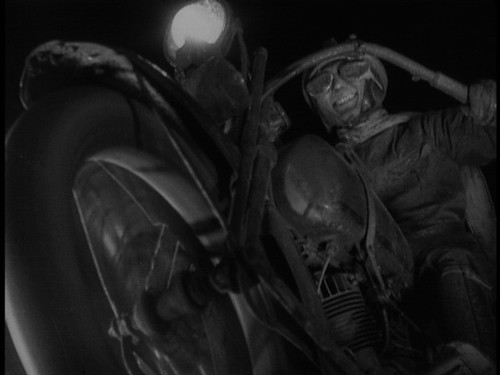
The opening sequence of Fritz Lang's Spies (1928) is just plain brilliant, so much information compressed into such a short space of time, the economy and sophistication of it is still startling, the excitement of those rapid scenes, their comic book vitality, all leading up to the appearance of criminal mastermind Haghi (Rudolf Klein-Rogge) and that wonderfully ominous 'Ich'. It's Lang inventing the visual grammer of the spy movie thirty years ahead of the game, just as he did for sci-fi epics with Metropolis and serial killers with M. You want to watch the rest of it now, right?
Saturday, July 16, 2011
Classic Scene #30

The ending of Michelangelo Antonioni's Zabriskie Point comes in three stages; first the multi-angled explosion, a thrilling succession of detonations, each one closer, each one beautiful in its annihilating force, like a Michael Bay wet dream. But then it goes somewhere Bay would never dream of going, wet or otherwise. The sound of Pink Floyd's Come in Number 51, Your Time Is Up drifts over a scattershot ballet of graceful, slow-motion debris, an atomised universe of shattered glass, torn clothes and flying food swimming in the blue ether, surreal and haunting. Then the music changes to a screaming intensity as explosions bloom out at us, books bursting like ripe flesh, pain and anguish erupting from beneath the visual. It's extraordinary, like nothing in cinema before or since. And then it just ends, abruptly, and we're back with the girl. Remember the girl? She's just imagined all that it seems. What could it mean?
Saturday, April 9, 2011
Classic Scene #29
In honour of Sidney Lumet, who died today, here's my favourite scene from Dog Day Afternoon, not only one of the great 1970s movies but one of the great 1970s New York movies, that sub-genre that captured the great metropolis in kinetic meltdown. Pacino is marvellous here, feeding off the tension, giddy with fear, an actor revelling in the stage. It's still electric to this day, as quintessentially New York as Lumet himself. Everybody now: 'Attica! Attica!'
Wednesday, March 30, 2011
Classic Scene #28
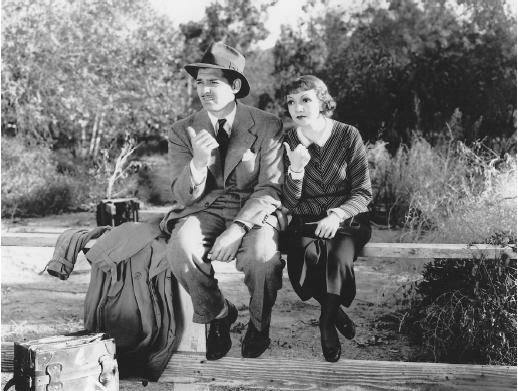
Clark Gable attempts to teach Claudette Colbert the subtleties of hitchhiking in Frank Capra's It Happened One Night (1934), the unbeatable template for romantic comedy ever since, an evergreen road trip through 30s America which tells us plenty about the rich and the working class, men and women too, with Gable in his prime and Colbert in his pyjamas. As the critic Pauline Kael observed:
'It made audiences happy in a way that only a few films in each era do. In the mid-30s, the Colbert and Gable of this film became American's idealised view of themselves - breezy, likeable, sexy, gallant, and maybe just a little harebrained. It was the Annie Hall of its day - before the invention of anxiety.'
Sunday, March 27, 2011
Classic Scene #27

The great Lotte Lenya singing Seeräuber Jenny from G.W. Pabst's 1931 version of Brecht and Weill's Die Dreigroschenoper (The Threepenny Opera). It's her stillness, I think, that's so spellbinding, and the veiled look in her eyes, like she's seeing that ship in her mind as clear as a vision, like it's not a dream but a promise.
You can imagine this woman at the French Revolution, at every bloody uprising of the poor and exploited before and since, her vengeance pure and justified, watching tyrants' heads roll one by one, crying out as each one falls - hoppla!
Friday, January 7, 2011
Classic Scene #26
'Ring out the old year, ring in the new, ring-a-ding-ding.'
What better way to start another year than with that line sighed by Miss Kubelik near the end of Billy Wilder's The Apartment, the words hollow with derision for the lies of festive hope, the final flourish mocking the flip verbal smartness of the executives at Consolidated Life, the heartless ease with which they seem to pass through life, leaving girls like Fran Kubelik in their wake. Wearing that paper crown over her blankly disappointed face she seems, briefly, like the loneliest person in New York, her heart soured forever.
But then that wonderful smile slowly lights up her face, sweet with release, as the drunken crowd mindlessly sing 'we'll take a cup of kindness yet, for auld lang syne.' And then she's running, in one of the most purely happy shots in all of cinema, her face blissful in the breeze, running towards C.C. Baxter, towards fruit cakes and card games and the kindness she deserves.
What better way to start another year than with that line sighed by Miss Kubelik near the end of Billy Wilder's The Apartment, the words hollow with derision for the lies of festive hope, the final flourish mocking the flip verbal smartness of the executives at Consolidated Life, the heartless ease with which they seem to pass through life, leaving girls like Fran Kubelik in their wake. Wearing that paper crown over her blankly disappointed face she seems, briefly, like the loneliest person in New York, her heart soured forever.
But then that wonderful smile slowly lights up her face, sweet with release, as the drunken crowd mindlessly sing 'we'll take a cup of kindness yet, for auld lang syne.' And then she's running, in one of the most purely happy shots in all of cinema, her face blissful in the breeze, running towards C.C. Baxter, towards fruit cakes and card games and the kindness she deserves.
Tuesday, December 7, 2010
Classic Scene #25

'Yes, the newspapers were right: snow was general all over Ireland. It was falling on every part of the dark central plain, on the treeless hills, falling softly upon the Bog of Allen and, farther westward, softly falling into the dark mutinous Shannon waves. It was falling, too, upon every part of the lonely churchyard on the hill where Michael Furey lay buried. It lay thickly drifted on the crooked crosses and headstones, on the spears of the little gate, on the barren thorns. His soul swooned slowly as he heard the snow falling faintly through the universe and faintly falling, like the descent of their last end, upon all the living and the dead.'
- from The Dead by James Joyce
Classic Scene #24
Sometimes, though, innocence is just that, not lost just pristine like the first fall of snow, the very first time children see it, when it's not a metaphor for anything, just pure wonder and fun, like Bambi's surprise at his own footprints in the snow or Thumper's infectious excitement at discovering the water is stiff and wonderfully slippy.
Monday, December 6, 2010
Classic Scene #23
As it's started snowing heavily again outside I suppose it's time for some more snow-related movie scenes. The most famous, of course, is little Charlie Kane and that sleigh in Citizen Kane, not to mention the snowflakes skittering through time in the smashed snow globe as old Charles breathes his last. Welles returned to snow as an emblem of lost innocence again the following year in this lovely scene from The Magnificent Ambersons. But in Jim Jarmusch's blank-generation hipster classic Stranger Than Paradise , snow becomes a white-out metaphor for the empty nothing of the characters' lives as they stare out at what's supposed to be Lake Erie, but is really the bleak reality of their future lives. Surely one of the worst tourist visits ever.
Monday, November 22, 2010
Classic Scene #22
Nic Roeg's Don't Look Now is a ghost story with a difference, built on the usual Gothic principles of premonition and dread but complicated by more emotionally profound kinds, the unspoken fears lurking in every parental mind, the potential for loss, the devastation of grief and guilt. The result is like nothing you've ever seen. Roeg's unique style, a quantum splintering of time, poetic connections between images, motifs chiming and cameras zooming with woozy significance, all come together in this opening scene to create a technically sublime waking nightmare, horror movie rhyming with muddy reality, every superstitious fear rooted in real fear, verified by it, the unthinkable making everything possible, necessary even.
Friday, October 29, 2010
Classic Scene #21
On a more genuinely scary note, here's another medium getting in contact with the dead, but we're a long way from dotty old Madame Acarti here. In this scene from superb Spanish chiller The Orphanage a paranormal investigation team led by the psychic Aurora (Geraldine Chaplin) attempt to make contact with the spirits of the old orphanage. There are no laughs in this one.
Classic Scene #20
To get everyone into the Halloween mood, a little seance with Madame Acarti. Mind you, Blithe Spirit being a Noel Coward play it's a very British kind of seance, played mainly for laughs. But atmospheric direction courtesy of David Lean and the wonderfully bonkers Margaret Rutherford as Madame Acarti eerily channeling a little girl's voice make it more than just a comic scene.
Sunday, October 3, 2010
Classic Scene #19
Tony Curtis was one of the most recognisable movie stars in the world, but his fame was built on only a few good movies. Naming six would be a challenge. Not surprisingly then, most of the focus after his death has been on Some Like It Hot and to a lesser extent Sweet Smell Of Success (both amazing films, unquestionably his best performances, so no complaints there). Still, I'd like to pay tribute to his passing with a scene from one of the others worth mentioning, Blake Edward's The Great Race (1965), a period farce in the style of It's A Mad Mad Mad Mad World (1963) or Those Magnificent Men In Their Flying Machines (1965), reuniting Curtis with his Some Like It Hot co-star Jack Lemmon. The scene I've picked is the fantastic custard pie fight, arguably the finest in movie history. I like to imagine it's where Curtis is now, in that eternal custard pie fight in the sky with Lemmon at his daffy best and the divine Natalie Wood.
Tuesday, September 14, 2010
Classic Scenes #18
The pleasure of this scene from Harvey (1950) isn't just the quoteable wisdom of the words but also the music of their delivery. While all the focus is rightly on Stewart's iconic Elwood P. Dowd, don't miss the plummy rhythms of Cecil Kellaway as psychiatrist Dr. Chumley, the way he uses those crisp consonants and rolling rs to run his words into each other, riding the internal rhymes of lines like 'this sister of yours is at the bottom of a conspiracy against you.'
But then there's that lovely, rueful 'Ohhh doctor' from Stewart and like one musician handing over to another, he begins his solo. Notice the run-over into the next sentence before 'she always called me Elwood', those softly echoing 'oh sos' and the warm emphasise of 'I recommend pleasant'. It's a masterclass of tone and rhythm and I never grow tired of hearing or seeing it.
But then there's that lovely, rueful 'Ohhh doctor' from Stewart and like one musician handing over to another, he begins his solo. Notice the run-over into the next sentence before 'she always called me Elwood', those softly echoing 'oh sos' and the warm emphasise of 'I recommend pleasant'. It's a masterclass of tone and rhythm and I never grow tired of hearing or seeing it.
Subscribe to:
Posts (Atom)